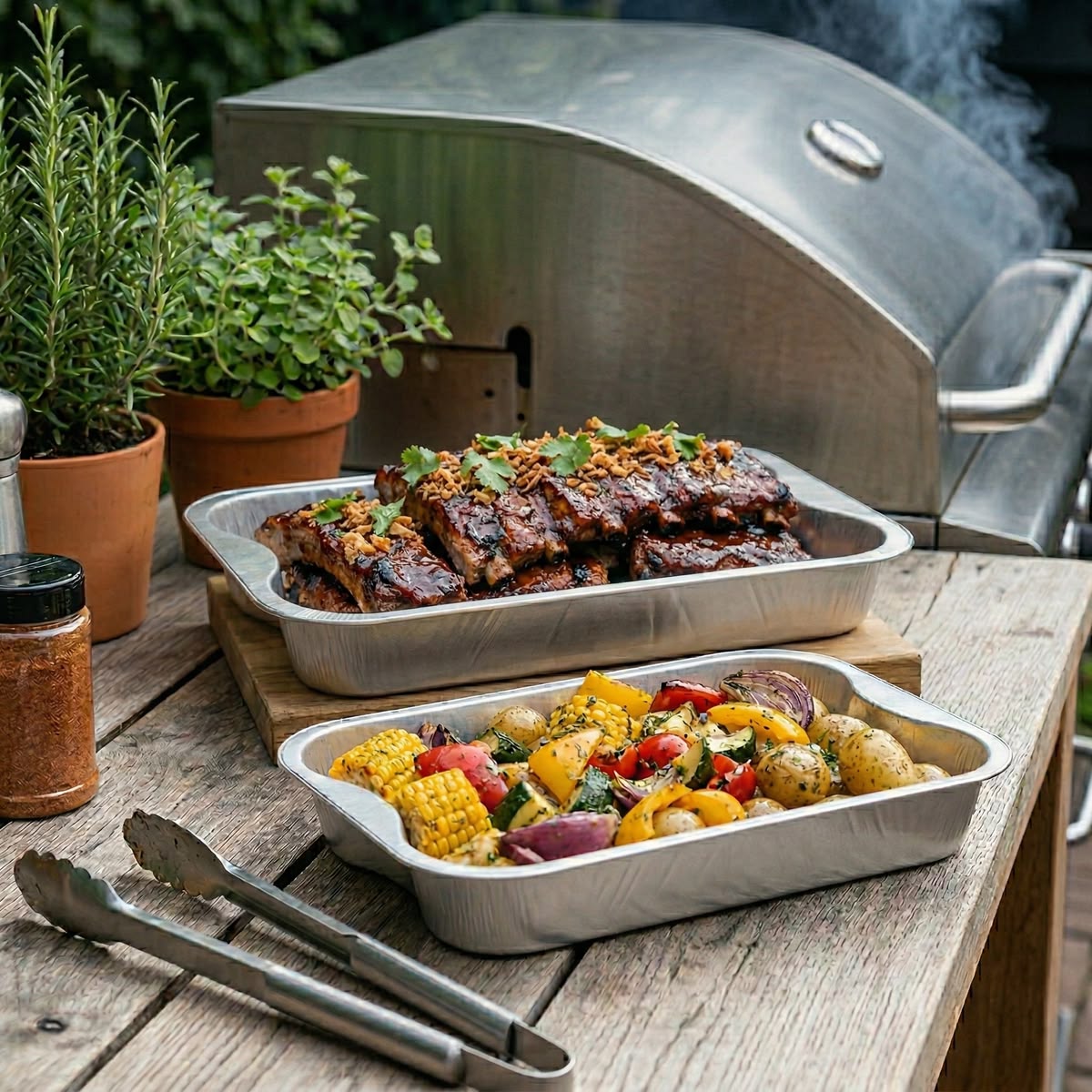
What Is Food Packaging? A Complete Guide for Food Businesses
What Is Food Packaging? A Complete Guide for Food Businesses
Introduction
Every meal that reaches a customer depends on effective food packaging.
From takeaway containers at restaurants to ready-to-eat meals in supermarkets, food packaging plays an essential role in protecting food quality, improving transportation, and creating a better customer experience.
But food packaging is much more than simply a container.
It is a complete system designed to protect food from production to consumption while maintaining safety, freshness, convenience, and presentation.
In this guide, we will explain what food packaging is, why it matters, the different types of food packaging materials, and how businesses can choose the right packaging solution.

What Is Food Packaging?
Food packaging refers to the materials, containers, and systems used to protect, store, transport, and present food products.
It serves as a barrier between food and the external environment, helping maintain:
- Food safety
- Freshness
- Quality
- Convenience
- Product appearance
Food packaging is used across almost every part of the food industry, including:
A good packaging solution does not simply hold food—it helps preserve the entire food experience.
Why Is Food Packaging Important?
Food packaging plays several important roles in modern food businesses.
Protecting Food Safety
The primary purpose of food packaging is to protect food from contamination.
Packaging helps prevent exposure to:
- Dust
- Moisture
- Bacteria
- External damage
Food-grade packaging materials are designed to safely contact food while maintaining product quality.
For restaurants and food manufacturers, reliable packaging is an essential part of food safety management.
Maintaining Food Quality and Freshness
Food quality can quickly decline without proper packaging.
The right container helps maintain:
- Temperature
- Texture
- Flavor
- Appearance
For example:
Hot meals require heat-resistant containers.
Frozen foods require freezer-compatible packaging.
Saucy foods require leak-resistant solutions.
Choosing the correct packaging depends greatly on the type of food being served.
Improving Transportation and Delivery
The growth of food delivery has made packaging more important than ever.
During transportation, food packaging must handle:
- Movement
- Stacking
- Temperature changes
- Longer delivery times
For takeaway businesses, packaging quality directly affects customer satisfaction.
A container that leaks or loses its shape can create a poor customer experience even when the food itself is excellent.
Enhancing Brand Image
Packaging is often the first physical interaction customers have with a food brand.
Professional packaging can communicate:
- Quality
- Attention to detail
- Brand values
Many restaurants now use premium packaging designs, custom printing, and unique colors to create stronger brand recognition.

Different Types of Food Packaging Materials
Food packaging is available in many different materials. Each option has different advantages depending on the application.
1. Aluminum Food Packaging
Aluminum containers are widely used in restaurants, catering, meal preparation, and food manufacturing.
Advantages include:
- Excellent heat resistance
- Suitable for hot food applications
- Lightweight and durable
- Recyclable material
- Premium appearance
Common applications:
Aluminum packaging is especially popular for businesses that need reliable performance with hot food.
2. Plastic Food Packaging
Plastic containers are commonly used because they are lightweight and available in many designs.
Advantages:
- Affordable
- Lightweight
- Various shapes and sizes
- Suitable for many cold food applications
Common uses:
- Salads
- Cold meals
- Desserts
- Storage containers
However, businesses should carefully consider temperature resistance and sustainability requirements when choosing plastic packaging.
3. Paper and Cardboard Packaging
Paper-based packaging is commonly used for:
Advantages:
- Lightweight
- Easy to print and customize
- Often associated with sustainability
However, paper packaging performance depends heavily on coatings and design when used with wet or oily foods.
4. Glass Packaging
Glass is commonly used for:
Advantages:
- Excellent barrier properties
- Reusable
- Premium appearance
However, its weight and fragility make it less common for food delivery applications.
5. Compostable and Plant-Based Packaging
With growing interest in sustainability, many companies are exploring alternatives made from:
- Sugarcane fiber
- Bamboo
- Corn-based materials
These solutions may be suitable for certain applications, although performance, availability, and cost vary.
How Do Businesses Choose the Right Food Packaging?
There is no single packaging solution that works for every food business. Companies should consider several factors.
Food Type
Different foods require different packaging.
Examples:
| Food Type | Recommended Packaging |
|---|---|
| Hot meals | Aluminum containers |
| Soups and sauces | Leak-resistant containers |
| Bakery products | Baking containers |
| Frozen meals | Freezer-compatible packaging |
| Catering portions | Large trays |
Temperature Requirements
Consider whether food needs to: Stay hot, Be refrigerated, Be frozen, Be reheated.
Temperature requirements often determine the most suitable material.
Transportation Needs
For delivery businesses, packaging should provide: Secure closure, Leak protection, Stackability, Durability.
Brand Requirements
Businesses may also consider: Custom printing, Premium colors, Packaging appearance, Customer experience.
The Future of Food Packaging
The food packaging industry continues to evolve. Several trends are shaping the future:
Sustainable Materials
Businesses are increasingly looking for recyclable and environmentally responsible packaging options.
Better Delivery Performance
As food delivery continues growing, demand is increasing for packaging that provides: Better insulation, Leak prevention, Improved convenience.
Custom Branding
Restaurants and food brands are using packaging as a marketing tool. Customized packaging helps businesses stand out in competitive markets.
Smart Packaging Solutions
Technology is also influencing packaging through: QR codes, Tracking systems, Improved food information.
How FoilTrust Supports Modern Food Businesses
FoilTrust provides professional aluminum food packaging solutions designed for restaurants, catering companies, meal prep businesses, and distributors.
Our solutions include:
We help food businesses choose packaging that balances: