Types of Food Packaging Materials: A Complete Guide for Food Businesses
Introduction
Food packaging plays an essential role in protecting products, maintaining quality, and delivering a better customer experience.
However, not all packaging materials are the same.
Different foods, industries, and business models require different packaging solutions. A restaurant serving hot takeaway meals has different needs from a bakery, frozen food manufacturer, or meal preparation company.
Choosing the right food packaging material affects:
- Food safety
- Product quality
- Transportation performance
- Customer satisfaction
- Sustainability goals
- Operating costs
In this guide, we will explore the most common types of food packaging materials, their advantages and limitations, and how businesses can choose the best option for their products.

What Are Food Packaging Materials?
Food packaging materials are the substances used to manufacture containers, wrappers, trays, boxes, and other packaging systems designed for storing and transporting food.
A good food packaging material should provide:
- Food safety
- Protection from contamination
- Strength and durability
- Suitable temperature resistance
- Convenience for customers
- Appropriate environmental performance
Common food packaging materials include:
Each material has unique characteristics and is suitable for different applications.
1. Aluminum Food Packaging
Overview
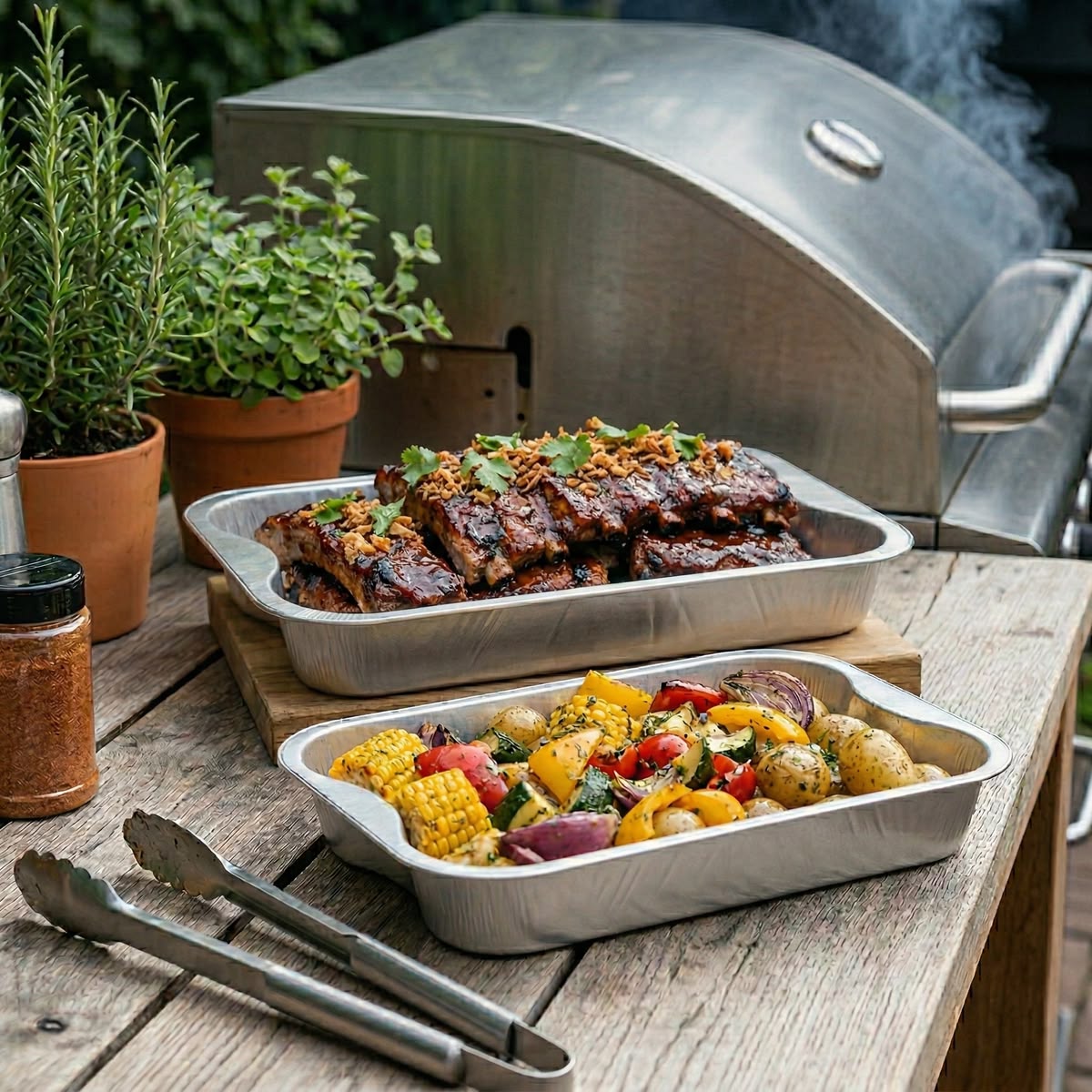
Aluminum is one of the most widely used materials for commercial food packaging, especially for restaurants, catering companies, meal prep businesses, and ready-to-eat food manufacturers.
Aluminum containers are valued for their combination of strength, heat resistance, and recyclability.
Advantages of Aluminum Packaging
Excellent Heat Resistance
One of the biggest advantages of aluminum containers is their ability to handle high temperatures.
They are commonly used for:
Many aluminum containers can be used directly in conventional ovens, providing convenience for both businesses and customers.
Strong Food Protection
Aluminum provides excellent protection against:
- Moisture
- Grease
- Light
- External contamination
This makes it suitable for foods that require reliable protection during transportation and storage.
Premium Appearance
Modern aluminum containers are available in different finishes, including:
- Matte gold
- Black
- Silver
- Custom colors
Premium packaging can improve food presentation and strengthen brand perception.
Highly Recyclable
Aluminum is one of the most recyclable packaging materials.
Its recyclability makes it an attractive option for businesses looking for more sustainable packaging solutions.
Common Applications
Aluminum food packaging is commonly used for:
2. Plastic Food Packaging
Overview
Plastic is one of the most commonly used food packaging materials because it is lightweight, flexible, and cost-effective.
Different types of plastic are used for different applications.
Common examples include:
Advantages of Plastic Packaging
Lightweight: Plastic containers are easy to transport and handle.
Flexible Designs: Plastic can be manufactured into many shapes and sizes. This makes it suitable for:
- Salad containers
- Beverage cups
- Sauce containers
- Cold food packaging
Cost Effective: Plastic packaging is often affordable, making it popular for high-volume food businesses.
Limitations of Plastic Packaging
Plastic performance depends greatly on the material type.
Some plastic containers may have limitations regarding:
- High temperatures
- Oven use
- Sustainability concerns
Businesses should carefully select the right plastic type based on their application.
3. Paper and Cardboard Packaging
Overview
Paper-based packaging is widely used in takeaway and retail food industries.
Common examples include:
Advantages of Paper Packaging
Easy Customization: Paper and cardboard surfaces are easy to print, making them popular for branded packaging.
Lightweight: Paper packaging is easy to transport and store.
Consumer Familiarity: Many customers associate paper packaging with environmentally friendly choices.
Limitations of Paper Packaging
Paper alone has limited resistance to:
- Water
- Oil
- Grease
Many paper products require coatings or treatments to improve performance.
This may affect recyclability depending on the material used.
4. Glass Food Packaging
Overview
Glass has been used for food and beverage packaging for many years.
Common applications include:
Advantages of Glass Packaging
Excellent Barrier Protection: Glass provides strong protection against:
- Moisture
- Oxygen
- External contamination
Premium Appearance: Glass packaging is often associated with high-quality products.
Reusable: Many glass containers can be reused.
Limitations of Glass Packaging
Glass is:
- Heavy
- Fragile
- More expensive to transport
Because of these factors, it is less common for food delivery applications.
5. Compostable and Plant-Based Packaging
Overview
With increasing interest in sustainability, many businesses are exploring alternative packaging materials made from renewable resources.
Examples include:
Advantages
Potential benefits include:
- Renewable raw materials
- Reduced dependence on fossil-based plastics
- Sustainable brand positioning
Limitations
Performance can vary depending on material quality, manufacturing process, and food application.
Some compostable materials may not perform as well with:
- Hot liquids
- Long storage periods
- Greasy foods
Food Packaging Materials Comparison
| Material | Heat Resistance | Durability | Sustainability | Common Uses |
|---|---|---|---|---|
| Aluminum | Excellent | Excellent | High | Hot meals, catering, ready meals |
| Plastic | Medium | Good | Depends | Cold food, storage |
| Paper/Cardboard | Low-Medium | Medium | Depends | Boxes, dry foods |
| Glass | Excellent | High | High | Premium products |
| Compostable Materials | Medium | Medium | High potential | Takeaway, eco packaging |
How to Choose the Right Food Packaging Material?
Businesses should consider several factors before selecting packaging.
1. Food Type
Ask:
- Is the food hot or cold?
- Does it contain sauce or grease?
- Does it need reheating?
Example: Hot meals with sauces often require stronger, heat-resistant packaging.
2. Transportation Requirements
For delivery businesses, consider:
- Leak prevention
- Stacking ability
- Container strength
- Temperature retention
3. Customer Expectations
Modern customers care about:
- Convenience
- Appearance
- Sustainability
Packaging is now part of the overall dining experience.
4. Business Goals
Companies should balance:
- Product performance
- Cost
- Sustainability
- Brand image
The cheapest packaging is not always the most cost-effective choice.
Which Food Packaging Material Is Best?
There is no single material that is perfect for every application.
The best choice depends on:
- Food type
- Storage requirements
- Transportation conditions
- Customer expectations
- Sustainability goals
For businesses serving hot meals, catering, and ready-to-eat foods, aluminum containers provide an excellent combination of performance, convenience, and professional presentation.
Why Choose FoilTrust Aluminum Food Packaging?
FoilTrust specializes in aluminum food packaging solutions for restaurants, catering companies, meal prep businesses, and distributors worldwide.
Our products include:
We help food businesses select reliable packaging solutions designed for: